
South India Tour Packages
From ₹8,000 per person · The south of India is a different country from the north — Dravidian temples with 14-storey gopurams painted in thousands of figures, a coastline on two oceans, 900 kilometres of backwaters navigable by houseboat, a hill country that produces 60% of India's coffee and has been growing tea since 1840, and a palace city that turns on 96,000 bulbs every Sunday and on Dasara
Budget South India Tour Packages — Kerala + Karnataka + Tamil Nadu from ₹8,000 per Person
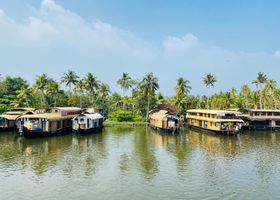
South India is accessible from most Indian cities with direct flights: Delhi to Kochi (COK) 2.5 hrs from ₹4,500; Delhi to Chennai (MAA) 2.5 hrs from ₹4,000; Delhi to Bangalore (BLR) 2.5 hrs from ₹4,000. Mumbai to Kochi 1.5 hrs from ₹2,500. Budget hotel in Alleppey (backwater area): ₹1,000–1,800/night; standard houseboat (2-bedroom, dinner + breakfast): ₹7,000–10,000/boat/night (split between group). Alleppey is 90km from Kochi (2 hrs). Munnar is 130km from Kochi (4 hrs by road via Kothamangalam). Mysore is 140km from Bangalore (3 hrs). Mahabalipuram is 58km from Chennai (1.5 hrs by road). Hampi is 340km from Bangalore (5 hrs by bus or train to Hospet + taxi). KSRTC night buses connect Bangalore to Hampi (₹550, 7 hrs). The Alleppey to Kollam canoe day trip (8 hrs, ₹600/person, DTPC) is the most budget-friendly way to see the Kerala backwaters. Kerala backwater houseboat (kettuvallam): traditional rice-barge converted for tourism; cook on board; depth less than 3 metres throughout; 900km of navigable backwaters on the west coast connected by Vembanad Lake (the longest lake in India, 96km). Budget South India tour from ₹8,000 per person all-inclusive.

Budget Kerala Backwaters & Hills
Kochi Fort → Alleppey Houseboat Backwaters → Munnar Tea Gardens → Thekkady Periyar

Budget South India Temples Tour
Chennai → Mahabalipuram UNESCO → Kanchipuram 1,000 Temples → Madurai Meenakshi → Rameshwaram

Budget Karnataka Heritage Tour
Hampi UNESCO → Mysore Palace + Dasara → Coorg Coffee → Belur Halebidu → Chikmagalur

Budget Kerala + Tamil Nadu Combo
Kochi + Alleppey + Munnar + Ooty + Coimbatore → Madurai Meenakshi → Thanjavur Big Temple

Budget Pondicherry + Kerala Short Break
Chennai → Mahabalipuram → Pondicherry French Quarter + Auroville → Kerala Backwaters
South India Grand Classic Tour
Kerala + Tamil Nadu + Karnataka — Backwaters + Temples + Mysore + Hampi + Coorg Complete Circuit
Kerala Gods Own Country Complete
Kochi + Munnar + Thekkady + Alleppey + Kumarakom + Varkala + Kovalam — Full Kerala Circuit
Tamil Nadu Temple Heritage Circuit
Chennai → Mahabalipuram → Thanjavur → Kumbakonam → Madurai → Rameshwaram → Kanyakumari

Karnataka Wildlife + Heritage Circuit
Hampi + Mysore + Coorg + Kabini + Nagarhole + Bandipur — South India's Complete Wildlife Heritage
South India + Tirupati Pilgrimage
Tirupati Venkateswara → Chennai → Mahabalipuram → Rameshwaram → Madurai → Kerala
South India Beach + Heritage Circuit
Chennai Marina → Pondicherry → Varkala → Kovalam → Alleppey → Mahabalipuram → Kanyakumari

Complete South India Mega Circuit
Kerala + Karnataka + Tamil Nadu + Pondicherry — Backwaters, Temples, Palaces, Wildlife, Beaches
Luxury Kerala Houseboat & Ayurveda
Taj Malabar Kochi + Windermere Munnar + Premium Houseboat + Somatheeram Ayurvedic Retreat
Luxury Mysore + Kerala Palace Circuit
Lalitha Mahal Palace Mysore + Tiger Trail Kabini + Taj Malabar Kochi + Premium Houseboat
Ultimate South India Heritage Luxury
Lalitha Mahal + Taj Malabar + Houseboat + Chettinad Heritage Villa + Pondicherry Villa
South India Tour Guide — The Complete Traveller's Reference
Holiday Vibez curates South India tour packages spanning four states and every style of travel — backwater cruises, Dravidian temple circuits, wildlife safaris, hill station escapes, heritage palace stays, beach holidays and ayurvedic wellness retreats. South India (Kerala, Karnataka, Tamil Nadu, Andhra Pradesh, Telangana and the union territory of Pondicherry) is geographically and culturally distinct from the rest of India: the Dravidian languages (Tamil, Kannada, Telugu, Malayalam) predate the Indo-Aryan languages of the north; the temple architecture (the gopuram tower form, covered in thousands of painted stucco sculptures, reaching 50–65m in height) is found nowhere else in the world; the coconut-palm and backwater landscape of Kerala is unlike any other Indian state; and the Deccan plateau (Karnataka) harbours some of the most spectacular ruins of the medieval Hindu world. Kerala Backwaters: The Kerala backwater network is a 900km system of interconnected rivers, lakes, and lagoons running parallel to the Arabian Sea coast — it includes Vembanad Lake (96km long, the longest lake in India), the Kuttanad region (the only place in India where farming is done below sea level, at −1.2m to −2.2m, paddy fields reclaimed from the lake), and 44 rivers. The traditional houseboat (kettuvallam — woven bamboo and coir poles over a wood frame, no nails used in the traditional construction) was originally a rice barge; the tourism conversion began in the early 1990s when the first commercial houseboat was launched on Vembanad Lake at Alleppey. There are now approximately 1,500 houseboats in Kerala. A premium overnight houseboat includes a cook, 2 bedrooms, a roof deck for sunset watching, and dinner that is entirely rice-boat food: fish curry, prawn masala, appam, puttu, coconut-based gravies. The best stretch of backwaters for a day-trip is the Alleppey-Kuttanad region (Punnamada Lake); for overnight houseboats, the Alleppey–Kumarakom axis on Vembanad Lake is the classic route. Munnar Tea Gardens: Munnar (1,600m, Idukki District, Kerala) is the centre of the Kanan Devan Hills Plantations — 17,000 hectares of tea planted at altitudes between 1,200m and 2,500m. The tea from these estates is processed at the Nullatanni Estate (established 1877 by the British planter John Daniel Munro) and produces a high-altitude black tea with good body and a golden brew. The Eravikulam National Park (97 sq km, adjacent to Munnar) is the largest population of Nilgiri tahr (mountain goat, endangered, approx 750 animals in the park) anywhere in the world; the park also has leopards, sambar, gaur, and the endemic Shola grassland ecosystem. Mysore Palace (Amba Vilas, 1897–1912, Henry Irwin, Indo-Saracenic style combining Hindu, Muslim, Rajput and Gothic architecture) is the third most visited tourist attraction in India after the Taj Mahal and Tirupati Venkateswara — approximately 6 million visitors per year. The palace has 12 Hindu temples on the premises, 14 paintings by Raja Ravi Varma, a solid gold howdah (elephant sedan chair) that weighs 750kg and is displayed during the annual Dasara procession, and 96,000 light bulbs that illuminate the exterior every Sunday from 7–7:45pm and throughout the Dasara festival (October). The 10-day Mysore Dasara (Vijayadashami) festival draws approximately 1.2 million visitors to the city in the last 3 days alone; the final day procession includes the golden howdah carried by one of three temple elephants. Hampi (UNESCO World Heritage Site 1986, Vijayanagara District, Karnataka) was the capital of the Vijayanagara Empire from 1336 to 1565 — it was, at its height, one of the largest cities in the world, with a population estimated at 500,000 and a street market described by 16th-century Portuguese traveller Fernão Nunes as having more precious stones and rubies than any market he had seen elsewhere. The city was destroyed in 1565 by the Deccan Sultanates in the Battle of Talikota and never reoccupied; the 500+ surviving monuments — temples, colonnaded markets, royal baths, elephant stables, lotus mahal — cover 4,187 hectares of boulder-strewn terrain along the Tungabhadra River. The Virupaksha Temple (active since 7th century, the oldest functioning temple in the complex, with a 50m gopuram) is the only part of the site still in daily religious use. Meenakshi Amman Temple (Madurai, Tamil Nadu, current structure 17th century, on a site of continuous worship for 2,000+ years) has 14 gateway towers (gopurams), the tallest 52m, covered in 33,000 painted stucco sculptures each repainted every 12 years. The morning ritual (Kalasandhi Puja at 5:30am) where the presiding deity Meenakshi is awoken, washed, adorned with flowers, and presented with a mirror involves 100+ priests and lasts 45 minutes — it is open to non-Hindus as far as the outer courtyard. The temple has a Hall of 1,000 Pillars (actually 985) whose columns when struck produce musical notes. Brihadeeswarar Temple (Thanjavur, Tamil Nadu, 1010 CE, Raja Raja Chola I, UNESCO 1987) is one of the most extraordinary engineering achievements of pre-modern India: the 66m vimana (tower) was built without mortar — the stones are held entirely by their own weight in interlocking corbelled construction. The shadow of the finial (the crowning stone, which is a single 7.7m granite monolith weighing approximately 80 tonnes) is said to never fall on the ground at noon — it falls back onto the tower itself. The temple was built in 3 years (1007–1010 CE) under Raja Raja Chola I; the entire plan was drawn on the floor of the courtyard before construction began. Mahabalipuram (Shore Temple 700–728 CE, UNESCO 1984) is the oldest structural stone temple in South India, built by Pallava king Narasimhavarman II on the shore of the Bay of Bengal. The temple was submerged by the 2004 tsunami, which when it receded revealed ruins of earlier temples and structures on the seabed, confirming ancient accounts of a city that was swallowed by the sea. The Five Rathas (Pancha Rathas, 7th century) are five monolithic temples each carved from a single large boulder. Tirupati Venkateswara Temple (Andhra Pradesh, on the Tirumala Hills at 853m) receives approximately 7–9 million pilgrims per year — more visitors than any other place of worship in the world, including Mecca and the Vatican. The annual income of the Tirumala Tirupati Devasthanams (TTD) trust exceeds ₹1,000 crore. The ₹300 'Special Darshan' queue waiting time is typically 6–12 hours; the ₹700 'Special Entry Darshan' reduces this to 2–4 hours; online booking available at tirupatibalaji.ap.gov.in.
Getting there: Fly to Kochi (COK) for Kerala: Delhi 2.5 hrs, Mumbai 1.5 hrs, Chennai 1 hr. Chennai (MAA) for Tamil Nadu: Delhi 2.5 hrs, Mumbai 2 hrs. Bangalore (BLR) for Karnataka: Delhi 2.5 hrs, Mumbai 2 hrs. Best time: October–March for all regions (post-Northeast monsoon in TN, post-Southwest monsoon in Kerala). April–May: hot, good for hill stations (Munnar, Ooty, Coorg). June–September: Southwest monsoon, lush green but heavy rain on Kerala coast; good time for houseboat as water levels high and crowds low. Avoid Tamil Nadu coast November–December (Northeast monsoon). Ayurveda in Kerala: The peak season for Panchakarma (7–21 day treatment packages) is June–August when the air is cool and moist — the ideal condition for oil absorption through the skin. Reputable centres: Kottakkal Arya Vaidya Sala (Malappuram, 1902, the most established), Somatheeram (Kovalam, first ayurvedic beach resort in India), Vaidyaratnam (Ollur, Thrissur).



Plan My South India Trip 🌴
Free quote in 4 hours • South India specialists
Enquiry Received!
Our South India specialist will call within 30 minutes.
📞 South India Specialist Callback
Our expert calls within 30 minutes